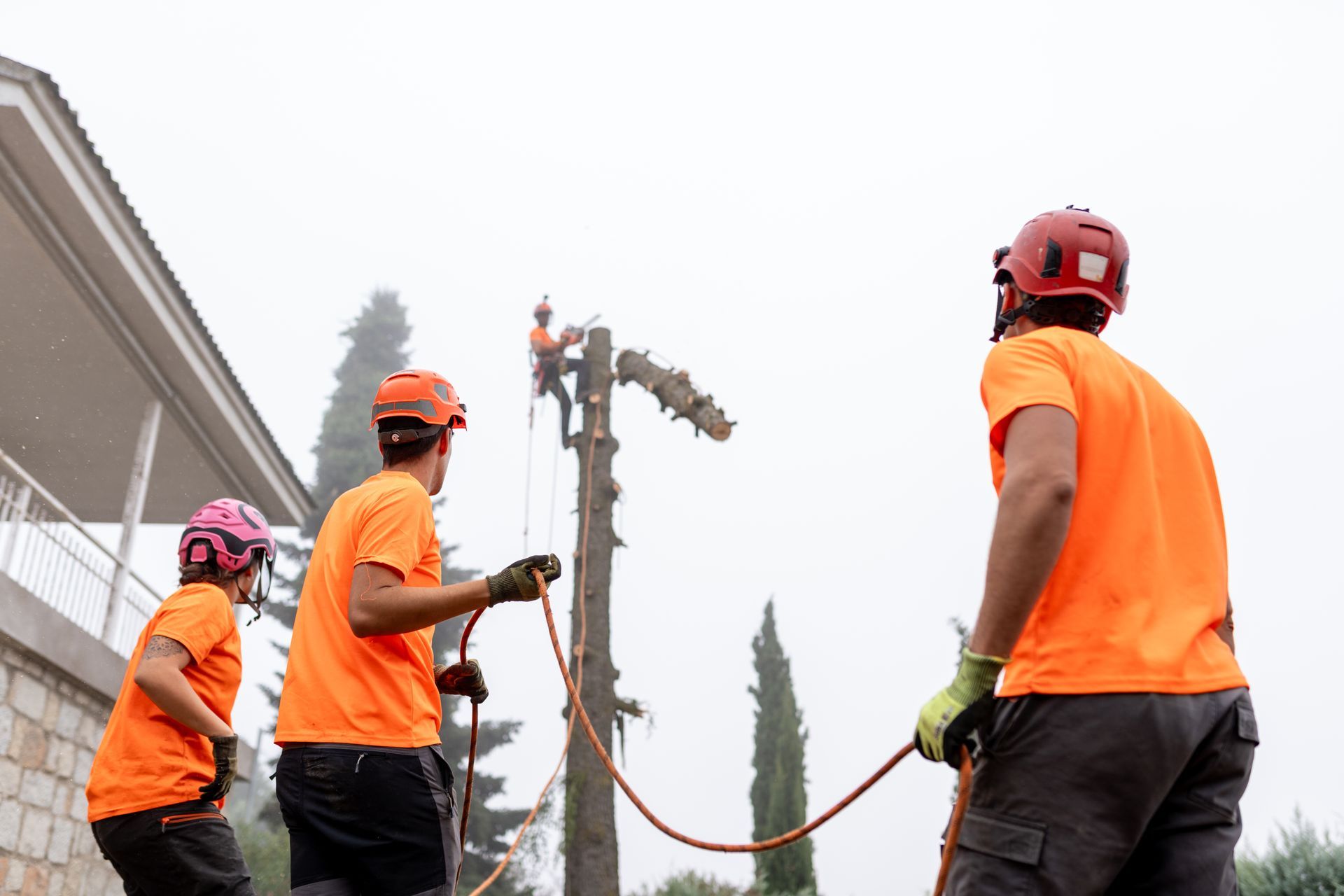
Hurricane Season Tree Prep: What Palm Beach County Homeowners Should Do in 2026
Hurricane season in Palm Beach County, FL, runs June 1 through November 30, peaking from mid-August to mid-October. Scheduling residential tree services in Palm Beach County before that window opens makes a real difference in how your landscape holds up.
Why Pre-Storm Tree Trimming Matters
Pre-storm trimming is one of the most effective ways to reduce wind damage. Dead and weakened branches fail first in high winds and can become projectiles. Thinning a top-heavy canopy lets wind pass through instead of pushing against the trunk.
The Solid Waste Authority of Palm Beach County (SWA) recommends finishing all major cutting well before June 1st. Curbside collection in unincorporated areas is capped at six cubic yards of yard waste per week, and oversized piles are the homeowner's responsibility.
Pre-Storm Trimming Checklist for 2026
Start here before calling a tree care professional:
▸ Remove dead, broken, or hanging branches near your home, driveway, or fence.
▸ Have large canopies thinned by a licensed arborist so wind can pass through.
▸ Inspect trunks for decay, hollow spots, or unusual lean.
▸ For palms, remove only brown, dead fronds never green ones in a "hurricane cut."
▸ Clear yard debris, loose furniture, and stored materials that could become airborne.
▸ Finish all trimming before June, when storm-watch work is unsafe.
Tree Species Most Vulnerable to Wind Damage
Native sabal palms, live oaks, and southern magnolias hold up well in storms, thanks to flexible trunks or deep roots. Laurel oaks, queen palms, focus, and royal poinciana carry more risk and often split or uproot. Have a professional inspect any growing near your home.
Sandy soil drains fast here, but heavy rainfall saturates it and undermines shallow roots. A tree that looks healthy in April can uproot by September.
When to Call a Licensed Arborist vs. Doing It Yourself
Work near power lines, rooftops, and neighboring yards requires training, equipment, and insurance. DIY trimming suits only small, low branches you can reach safely from the ground.
Anything involving height, heavy limbs, or a tree leaning on a structure needs a licensed, insured professional. Many Palm Beach County municipalities also require a removal permit.
Post-Storm Debris Safety
After a storm, check trees for cracked trunks, lifted roots, or hanging limbs. These hidden failures can drop branches weeks later. Never cut limbs under tension yourself. Post-storm residential tree services matter as much as pre-season prep.
Debris pickup timelines vary across Boynton Beach, Delray Beach, Lake Worth Beach, and West Palm Beach. Contact your municipality for schedules.
Frequently Asked Questions
When Is the Best Time to Trim Trees for Hurricane Season in Palm Beach County?
The ideal window is December through April, and the SWA recommends finishing major cutting before June 1. Booking early also beats the spring rush, since crews fill up fast.
Do I Need a Permit to Remove a Tree on My Palm Beach County Property?
Requirements vary by municipality and depend on species, location, and local code. Palm Beach Gardens, Boca Raton, and West Palm Beach each set their own rules, so confirm before cutting.
Is the "Hurricane Cut" on Palms Actually Effective?
No. Stripping green fronds weakens the palm and removes the protection around its terminal bud. Remove only dead, brown fronds.
Get Ready for Storm Season with Trusted Local Help
Countywide Tree Service has served Palm Beach County homeowners since 1980, offering licensed, bonded, and insured residential tree services: trimming, pruning, removal, and stump grinding. Call 561-642-4663 for a free estimate or contact the team online to schedule your pre-storm tree assessment. You can also find and review Countywide Tree Service on Google.